WHY IT MATTERS NOW:
The U.S.-Iran war became the story that absorbed everything this week: security, the economy, the courts, and presidential messaging. For a bicultural audience across the U.S. and Latin America, this is not just a geopolitical crisis. It is a warning about how an external conflict can raise daily costs and harden the political climate at home.
It also matters because it fits NB NOW’s editorial role: explaining what is happening now and why it matters, with speed, accuracy, and cultural context for bilingual audiences. That promise is clearly reflected in both the media kit and the brandbook.
THE NOW LAYER
- What Happened The U.S.-Iran war entered a more dangerous phase after Donald Trump issued a public 48-hour ultimatum to Iran, while reports piled up about downed aircraft, a missing pilot, and a rescue effort disrupted by Iranian forces. At the same time, NB NOW reported the dismissal of the U.S. Army chief of staff in the middle of the conflict, a move that suggests fractures at the highest level of the defense apparatus.
- How It Works When a war combines presidential threats, military losses, and changes in the chain of command, the risk is no longer only military. It becomes political, financial, and narrative. The U.S.-Iran war is now functioning as an uncertainty multiplier because every new incident accelerates decision-making, hardens official messaging, and pressures the markets.
- Who It Affects It affects troops, military families, and communities directly tied to the conflict first. But it also reaches millions of Latinos in the U.S., Central America, and Latin America, because rising oil prices and market volatility eventually hit gas, transportation, basic goods, and the broader sense of stability. The same climate of expanded executive power also connects to domestic fights like birthright citizenship.
POWER & POLICY HIGHLIGHT:
The most sensitive dimension for Latino families this week did not come only from the war front. It also came from the push to restrict birthright citizenship. NB NOW reported that Trump failed to persuade the Supreme Court to end that right, and that several justices appeared skeptical of reinterpreting the 14th Amendment. For mixed-status households, immigrants, and Latino communities, that confirms that the struggle over power is not happening only overseas. It is also happening over who belongs, who is protected, and who lives under legal uncertainty in the United States.
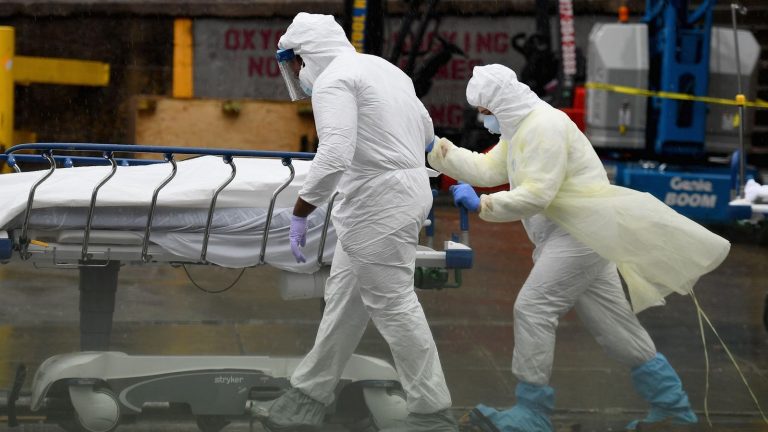
The U.S.-Iran war defined the entire week’s agenda. It was not a single headline. It was a chain of developments that hardened day by day. First came the most aggressive political signal: Trump warned that Iran had 48 hours left before “hell” would take over. Then came reports of U.S. aircraft being hit, a missing pilot, and a rescue operation that pushed tensions even higher. Once a conflict reaches that sequence, it stops being just an international story and becomes a total story.
The gravity deepened with the crisis inside Washington. The dismissal of the Army chief of staff during wartime projects an image of internal fracture inside the Pentagon. That is not a routine personnel matter. It is a sign that military and political leadership may not be aligned at the most delicate moment of the conflict. In a media environment flooded with noise, that detail changes the entire frame. We are no longer talking only about clashes with Iran. We are talking about institutional stability inside the U.S. government itself.
The other political story that reinforced this reading was Pam Bondi’s removal as attorney general. While it is a separate story, it helps explain the broader atmosphere of power in Washington. NB NOW framed it as a decision that reopens questions about Justice Department independence and executive interference in key institutions. Seen alongside the war, the dismissal reinforces an image of centralization and control from the White House. The result is a week in which force, internal discipline, and presidential narrative became tightly linked.
For NB NOW’s audience, though, the key point is not simply who won a political round. It is understanding how this reaches daily life. The U.S.-Iran war has already begun to show up in the markets. Oil rose and stocks fell after Trump’s rhetoric intensified. That reaction does not stay on Wall Street. For Latin America and Central America, where fuel costs shape transportation, food prices, and production, geopolitical volatility can quickly become everyday inflation. That is the right editorial bridge: connecting war to cost of living.
This is where the coverage gains real community weight. For a Latino family in Miami, Houston, San Pedro Sula, or Mexico City, a distant war feels abstract until gas prices rise, immigration rhetoric sharpens in Washington, or a sense of institutional fragility sets in. That is why this week should not be read as a collection of disconnected stories. The U.S.-Iran war activated three layers at once: military threat, economic stress, and a harder symbolic exercise of power.
In that context, the birthright citizenship case served as the week’s clearest institutional counterweight. While the executive branch raised the temperature in foreign policy and made abrupt moves inside government, the Supreme Court signaled resistance to dismantling a historic constitutional guarantee. It did not end the larger fight, but it did send a clear message: limits still exist. For Latino communities, that signal matters deeply because the debate is not theoretical. It defines belonging, security, and the future for children of immigrants born on U.S. soil.
This week’s brief also reveals the strongest story is not simply “Trump threatens Iran.” It is the fuller narrative: the U.S.-Iran war is already reshaping energy prices, Washington’s political temperature, and the anxiety of immigrant families who read every move as a signal about the country they live in.
Outside the hard-news core, there were two stories that widened the editorial map of the week. Artemis II offered a moment of wonder and technological ambition with the first images of Earth on the road back to the Moon. And the Gmail story translated a digital update into practical value for users trying to modernize their online identity without losing their account. Neither competes with the central story, but both show how NB NOW can blend hard news, technology, and service without losing coherence.
The Facts
The U.S.-Iran war escalated through Trump’s ultimatum, U.S. aerial losses, an urgent search for a missing pilot, and a reported crisis in the military chain of command. At the same time, the Supreme Court showed doubt about efforts to restrict birthright citizenship, and the markets responded with rising oil prices and falling stocks.
The Breakdown U.S.-Iran War
The right editorial reading is that the U.S.-Iran war is no longer an “external” conflict. It is already shaping internal perceptions of leadership, institutional stability, and economic vulnerability. When presidential rhetoric rises, the Pentagon shows tension, and markets react, the story changes scale. It is no longer only about what happens in the Middle East. It is about how that clash alters daily life and politics at home.
The Impact
The immediate impact is showing up on three fronts. First, cost of living, through pressure on oil, transportation, and essentials. Second, the political climate, because sudden executive moves project a more volatile Washington. Third, rights, because the fight over birthright citizenship makes clear that Latino families still experience their legal security as contested ground.
The Next Move U.S.-Iran War
What to watch next in the U.S.-Iran war is whether the White House turns rhetoric into a deeper escalation, whether the military side stabilizes its command structure, and whether economic pressure becomes more visible in fuel and household spending. At the same time, it will be important to see whether this week’s broader climate of power spills again into the courts, immigration policy, and other institutions.
What triggered this week’s urgency?
Trump’s public ultimatum to Iran, together with reports of U.S. aircraft being attacked and a missing pilot, turned the coverage into an open escalation story.
Why does this war matter for Latin America?
Because rising oil prices and falling markets affect fuel, transportation, and basic goods in economies that are highly sensitive to external shocks.
What does birthright citizenship have to do with this brief?
A lot. The same week showed the expansion of executive power on one front and institutional resistance on another, with direct consequences for immigrant families.
What does the dismissal of the military chief mean during a conflict?
It suggests deep tensions inside the management of the war and raises questions about cohesion within the U.S. defense structure.
Why should NB NOW lead this story this way?
Because its positioning is built around explaining fast-moving news with cultural context, clarity, and a bilingual lens for audiences across the U.S. and Latin America