
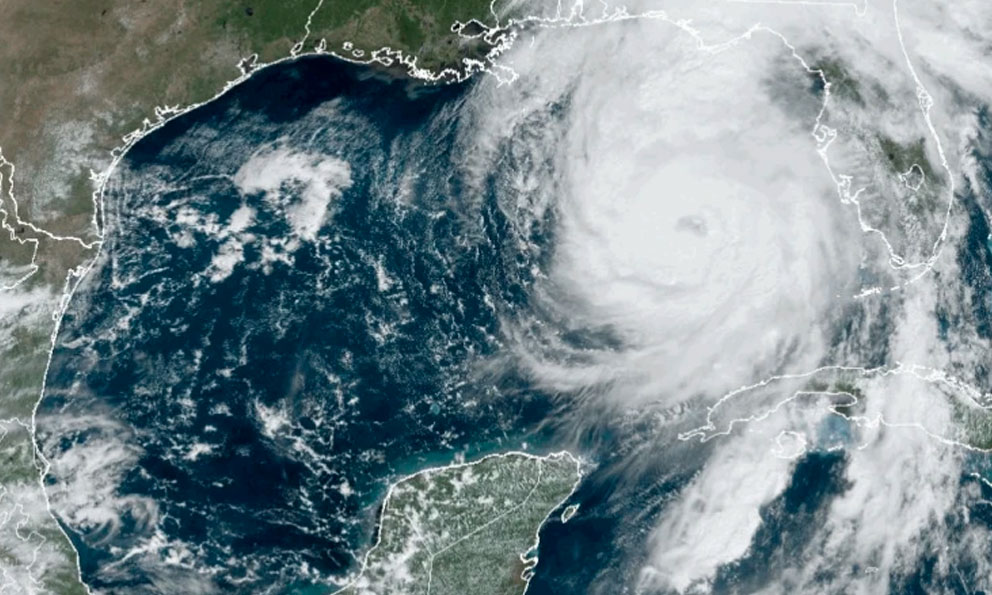
Hurricane Helene has left extensive damage and severe flooding in its wake, causing power lines to fall and affecting more than three million people.
As it moved through the United States, the natural phenomenon weakened, leaving destruction and severe damage in its path due to precipitation and destructive winds.
“We fear the worst when the sun comes up,” the Suwannee County Sheriff’s Office in Florida said Thursday night.
Authorities have requested prayers from around the world given the possibility that the damage will be extensive.
Helene intensified this Thursday, reaching Category 4 with sustained winds of 155 kilometers per hour (100 miles), and its power is expected to continue increasing as it approaches the Florida coast, according to the U.S. National Hurricane Center (NHC).
Currently, the system is located 550 kilometers south of Tampa and 585 kilometers from Apalachicola, both on the Florida peninsula. Helene threatens devastating winds, storm surges, and flooding that will affect a vast coastal region, where it is expected to make landfall tonight as a major hurricane.
The NHC has issued an urgent warning for individuals to quickly finalize their preparations and protect their lives and property. Helene is forecast to potentially reach Category 5 on the Saffir-Simpson scale, becoming the eighth hurricane of the season and the fourth to make landfall in the U.S. this year, following Beryl, Debby, and Francine.
According to the National Oceanic and Atmospheric Administration (NOAA), the Atlantic hurricane season, which began on June 1, could be more active than usual, with up to 13 hurricanes, of which between 4 and 7 could reach major hurricane status.